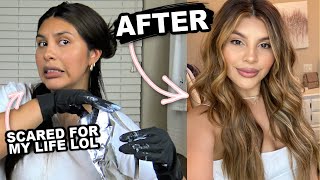
From Dark Brown to Caramel: A Complete Guide
Turning a deep, dark brown shade into a warm caramel hue is one of the most rewarding transformations you can achieve at home or in a salon. The result is a sun‑kissed look that adds dimension, softness, and a touch of golden warmth to any complexion. This guide walks you through the essential considerations, the step‑by‑step process, and the after‑care routine needed to keep caramel hair looking fresh and vibrant.
Why Choose Caramel?
Caramel hair sits between light brown and honey blonde, offering a natural‑looking glow without the harshness of a full blonde. It works well with a wide range of skin tones, especially those with warm or neutral undertones, and it blends seamlessly with the natural dark brown base, creating a soft gradient rather than a stark contrast.
Preparing Dark Brown Hair
Before any lightening, it’s crucial to assess the condition of your hair. Dark brown strands that have been previously colored, heavily conditioned, or exposed to heat may react differently to bleach.
Assessing Hair Health
- Texture check: Healthy hair feels elastic and smooth. If it feels brittle or overly dry, consider a deep conditioning treatment for at least a week before proceeding.
- Previous color: If you have a permanent dye, a color‑removing product may be needed to avoid unwanted undertones.
- Porosity test: Drop a few drops of water on a strand; if it absorbs quickly, your hair is highly porous and may lift faster, requiring closer monitoring.
Choosing the Right Lightening Method
There are two main approaches for dark brown hair: a traditional bleach lift or a “flash lift” using a lower‑volume peroxide. Flash lift (typically 20‑30 volume) is gentler and works well when you only need to raise the color a few levels before adding caramel tones. For darker hair that requires a higher lift, a full bleach with 30‑40 volume peroxide may be necessary, but it should be applied by a professional to minimize damage.
Step‑by‑Step Process
Follow these steps in order to achieve a smooth transition from dark brown to caramel.
Lightening Phase
- Mix the bleach powder with the chosen peroxide (20‑30 volume for a gentle lift, 30‑40 volume for a stronger lift). Stir until the mixture is smooth and free of lumps.
- Section the hair into four quadrants and apply the bleach starting at the mid‑lengths, moving toward the ends. Avoid the scalp for the first 10‑15 minutes to prevent irritation.
- Monitor the lift every five minutes. Dark brown hair typically needs 20‑30 minutes to reach a light amber stage, which is ideal for caramel tones.
- Rinse thoroughly with lukewarm water, then apply a protein‑rich conditioner to restore moisture.
Applying Caramel Tone
- Choose a caramel demi‑permanent or permanent color that matches the desired intensity. A demi‑permanent works well for subtle shifts, while a permanent provides longer‑lasting depth.
- Mix the color with the recommended developer (usually 10‑20 volume). The lower volume helps preserve the newly lifted shade.
- Apply the caramel tone evenly, starting at the roots if you performed a full lift, or focusing on the mid‑lengths and ends for a gradient effect.
- Leave the color on for the time indicated on the product label—typically 20‑30 minutes—checking the development every five minutes.
- Rinse with cool water, then follow with a sulfate‑free shampoo and a color‑protecting conditioner.
Aftercare and Maintenance
Caramel hair is prone to fading, especially if you frequently use heat tools or expose your hair to sunlight. A consistent aftercare routine will keep the color vibrant and the hair healthy.
Shampoo and Conditioner
- Use a sulfate‑free shampoo designed for color‑treated hair. Sulfates strip natural oils and accelerate color loss.
- Condition with a product that contains UV filters and antioxidants. These ingredients shield the hair from sun‑induced fading.
- Apply a weekly deep‑conditioning mask that includes proteins (keratin or silk amino acids) to reinforce the hair shaft after bleaching.
Protecting Color
- Limit heat styling to a maximum of two times per week. When you do use a flat iron or curling wand, set the temperature below 350°F (180°C) and always apply a heat protectant spray.
- Wear a hat or use a


![Caramel Highlights on Dark Hair [BALAYAGE HIGHLIGHTS ON DARK BROWN HAIR] #caramelhighlights](https://i.ytimg.com/vi/0D6MHpCU3qo/mqdefault.jpg)